

A stone rolled aside, cloth left in the tomb and light returning after darkness give Easter art its vocabulary. These ten contemporary AI-created artworks explore how color and composition can make the Resurrection of Jesus a subject for reflection throughout the year.
From the empty tomb to recognition
In John 20:1–10, Mary Magdalene finds the stone moved, and the disciples see the linen cloths. Later, in John 20:11–18, Mary recognizes Jesus when he calls her by name. Matthew 28:1–10 gives the angel and the guards a prominent role. Read these passages side by side and consider which part of the story you want a work to evoke: discovery, testimony or encounter.
What does the light mean in Resurrection art?
Dawn locates the story in time. A ring of radiance, a gold field or a glow around Christ can express the significance of the event. When looking at a work, distinguish the light that belongs to the setting from the light that directs attention toward the figure.
1. Dawn-Lit Light
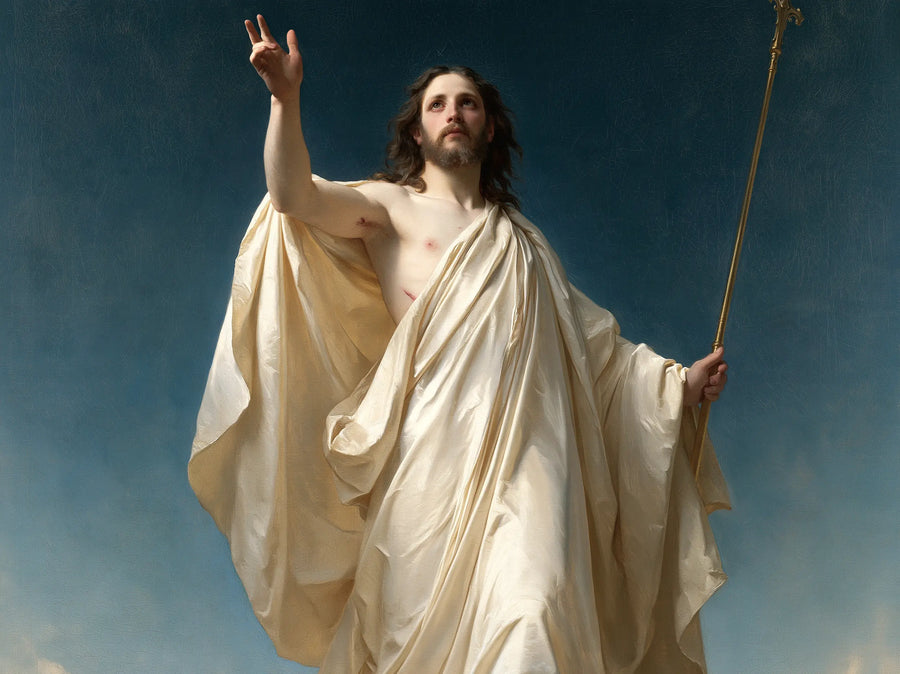
Dawn is a natural visual counterpart to John 20:1, where Mary arrives while it is still dark. Notice how much of the picture is given to the transition from night to day. A gentle shift in tone can carry the sense of discovery.
2. Radiant Presence

Consider where the brightest area falls in relation to Christ. Radiance can work almost like a halo, drawing the eye toward the person at the center. Compare this image with the candlelit version for a different sense of scale.
3. Sweeping Victory
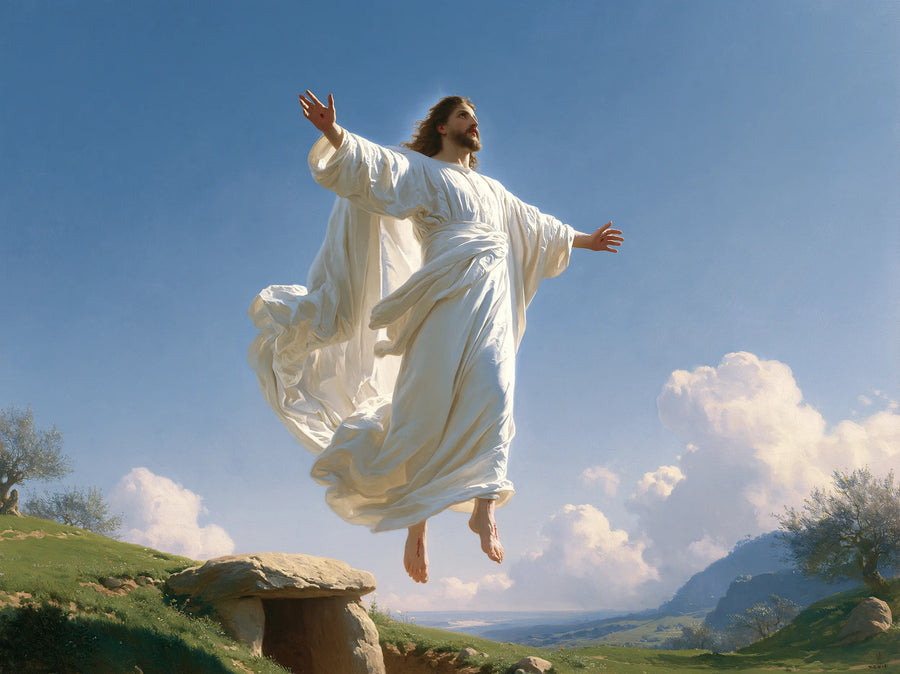
The title suggests movement. Look for the shapes that carry your eye across the image, and where that movement comes to rest. This is a good choice to compare with the more contained visual rhythm of Living Presence.
4. Carmine Glory
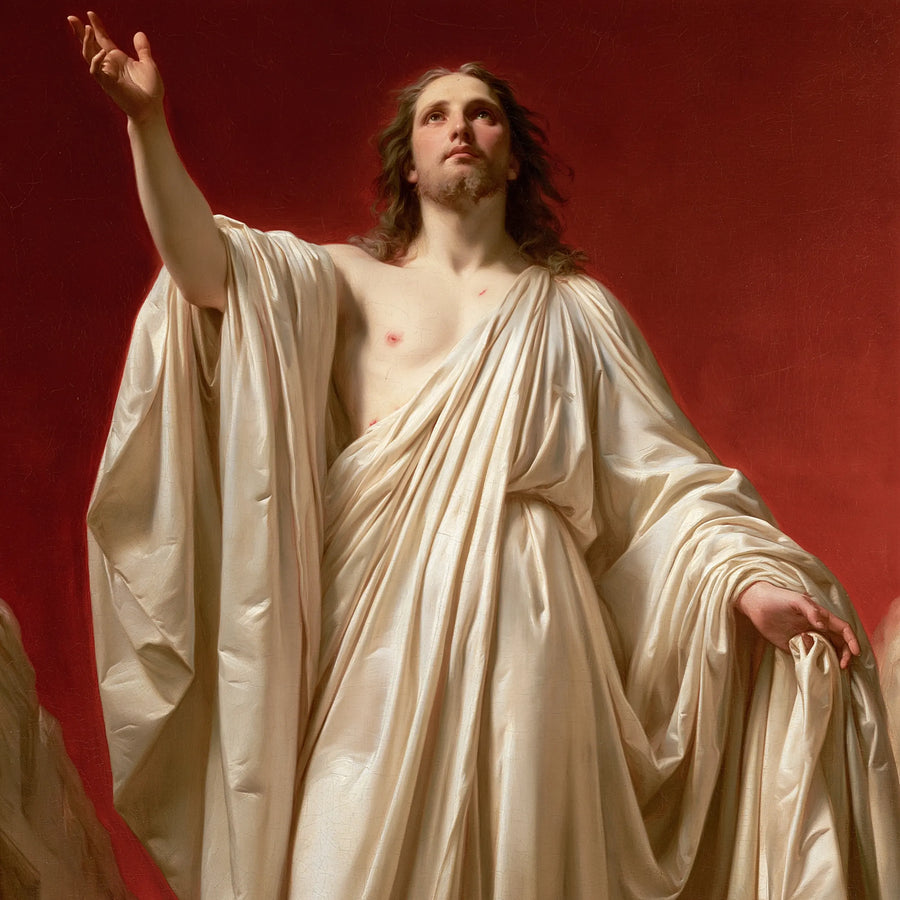
Carmine brings a strong warm color into an Easter palette often associated with white and gold. View the preview against a neutral background to see how the red changes the apparent brightness of the lighter passages.
5. Golden Glory
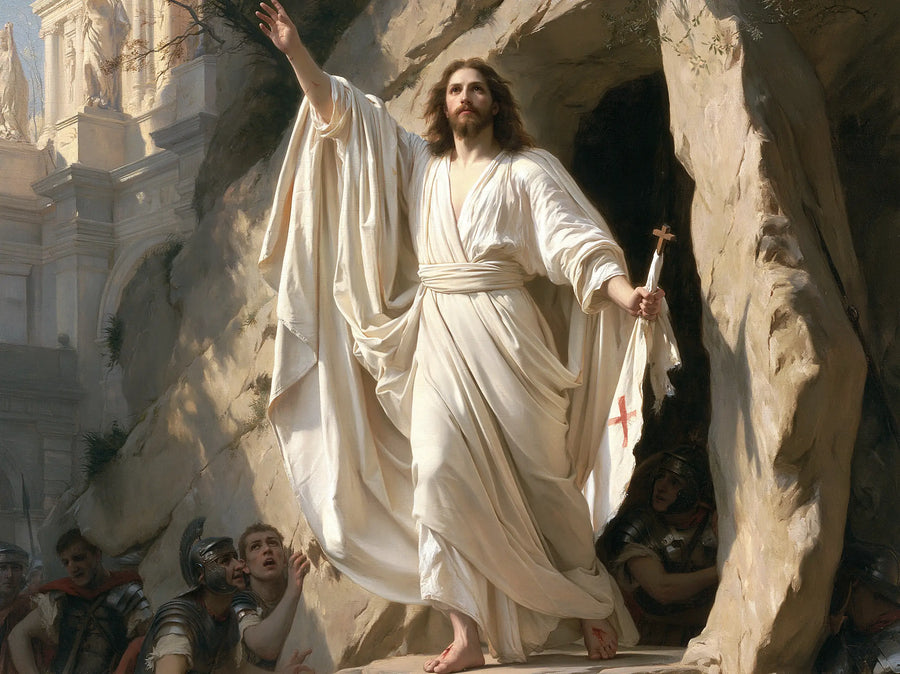
Gold gives artists a way to suggest a light that seems to belong to the subject itself. Compare this with Dawn-Lit Light, where the association is with a particular time of day.
6. Shadowed Revelation

Start with the first form you can distinguish in the shadows. A darker composition can echo the experience of finding a scene gradually. Give the preview a second look at the size you are considering, especially if the print will hang in low light.
7. Living Presence

Read this image slowly beside John 20:11–18. Mary recognizes Christ when he calls her by name. That passage makes presence as well as discovery a central part of Easter.
8. Ivory-and-Gold Glory
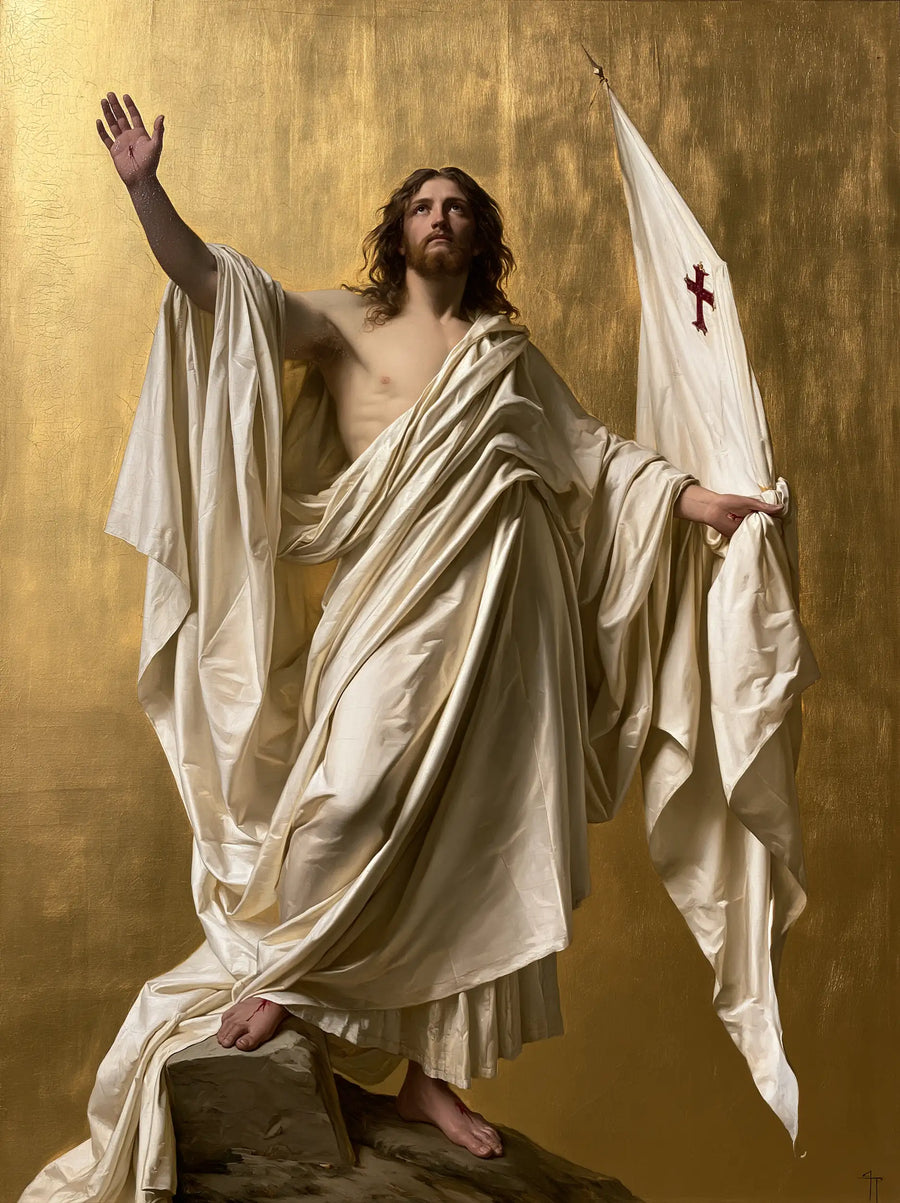
The combination of ivory and gold offers a softer contrast than the carmine and shadowed versions. Look for the small changes in value that keep pale areas distinct. These differences matter if the image will be seen across the room.
9. Sky-Borne Light
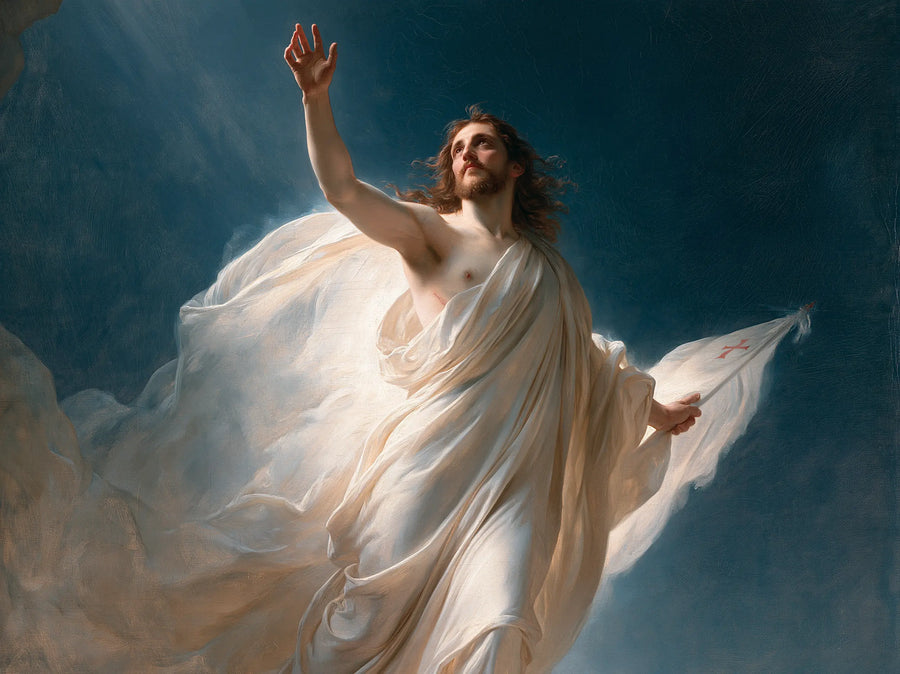
Follow the upper part of the composition and notice how the space around Christ affects the sensation of ascent. The Resurrection and the Ascension are separate episodes in the New Testament, even when Easter art uses upward movement as a visual sign.
10. Candlelit Revelation
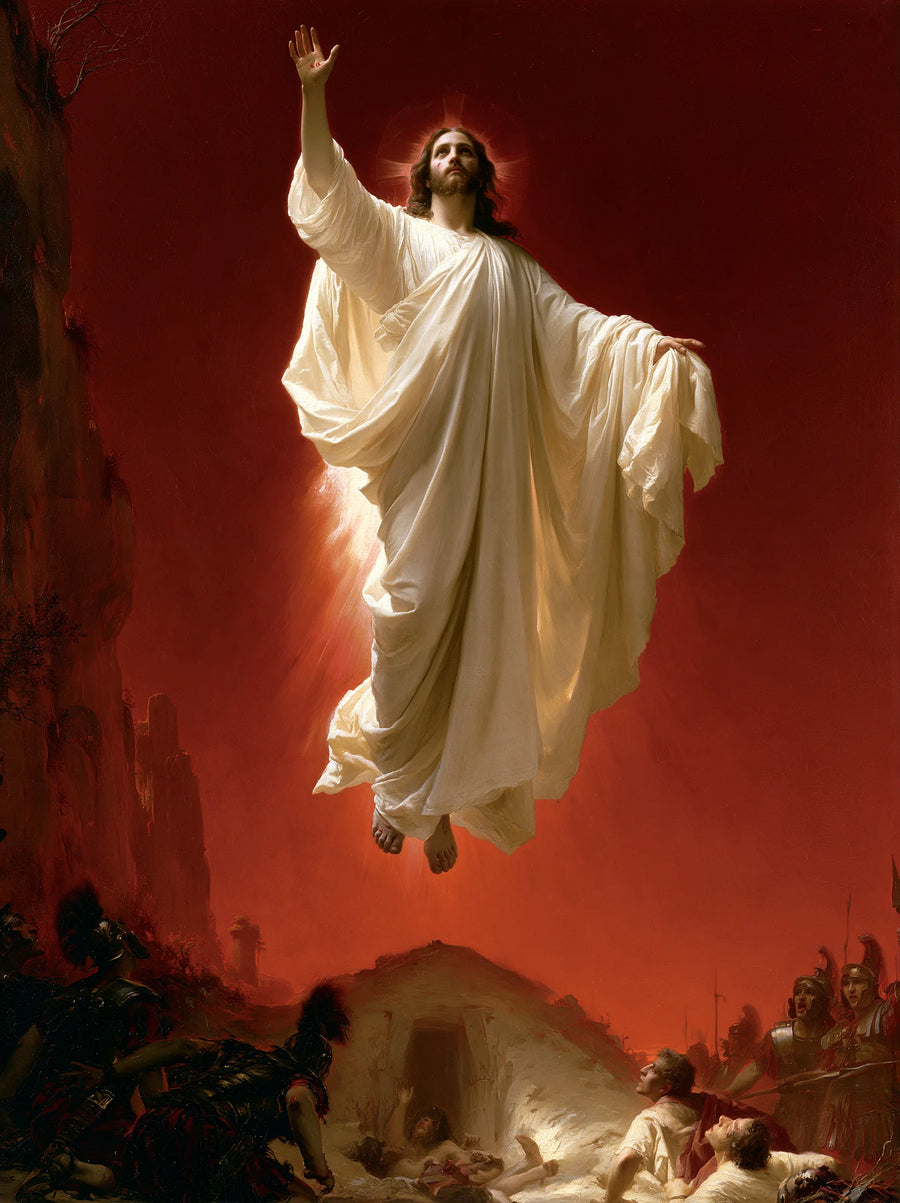
Candlelight gives a scene the scale of a vigil. It is a devotional choice by the artist. Try comparing it beside the open dawn of the first work, where light suggests another hour and a different kind of encounter.
Choosing a print for an Easter display or prayer corner
Start with where you will look at the work. For close viewing beside a Bible or a candle, a compact print can keep the composition within one glance. For a wall across the room, choose a size that preserves the distinction between Christ and the surrounding light. With a dark composition, check the preview on a moderately bright screen and consider whether the room has enough light to reveal the shadow detail.
If you already own a frame, compare its opening with the image proportions before ordering. A tall composition often needs space above the figure, and a crop can diminish the sense of upward movement. Check available paper and canvas finishes on the product page.
Browse the full Resurrection collection · Explore historical Resurrection paintings