

Joseph leads the way as Mary keeps the child close. These ten contemporary artworks created with AI explore the Holy Family’s journey through mountain roads, open valleys and moments of shelter.
Why did the Holy Family leave for Egypt?
In Matthew 2:13–15, an angel warns Joseph in a dream that Herod is looking for Jesus. Joseph takes Mary and the child away by night. The account gives the journey urgency and leaves artists room to imagine the route, the terrain and the gestures of care along the way.
What does the donkey mean in Flight into Egypt art?
The donkey is a familiar artistic detail. It gives the viewer an immediate sense of travel and allows Mary to hold the child while Joseph guides the group. In landscape versions, follow the route before looking at the figures. In a more intimate composition, begin with the hands, the folds of cloth and the direction of the travelers’ gaze.
1. The Mountain Road toward Refuge
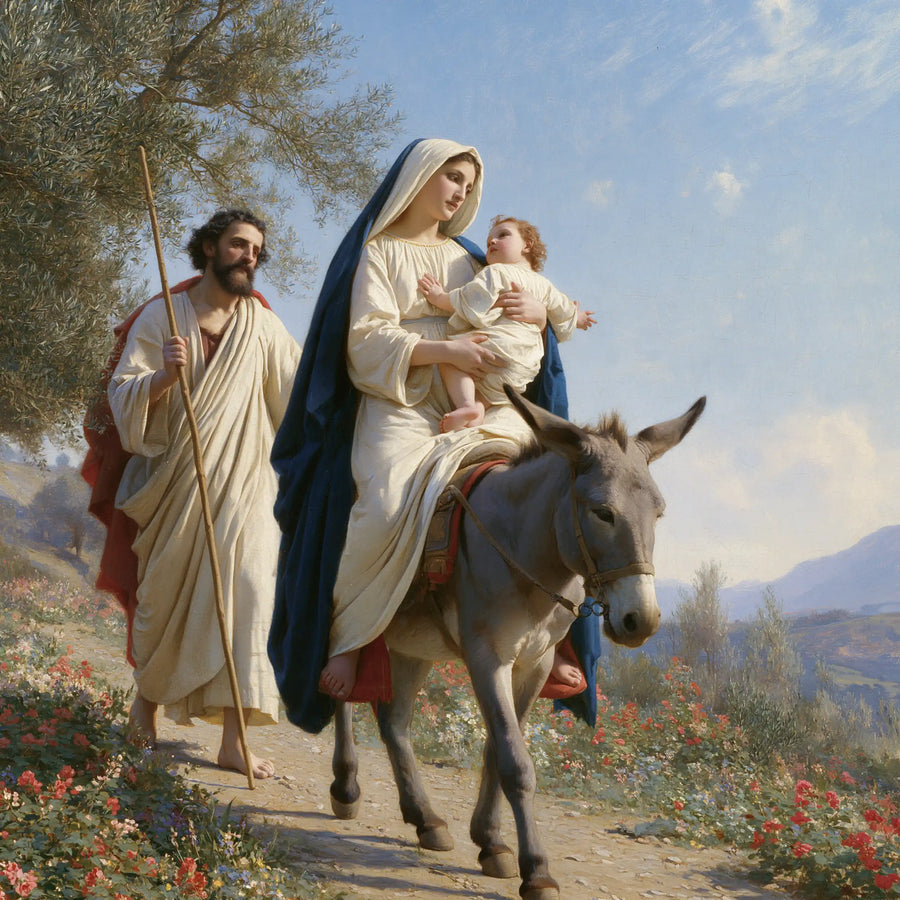
Follow the mountain road before looking at the family’s faces. The terrain sets the pace of the scene and makes the distance they have to cover easier to imagine.
2. The Staff and the White Mantle
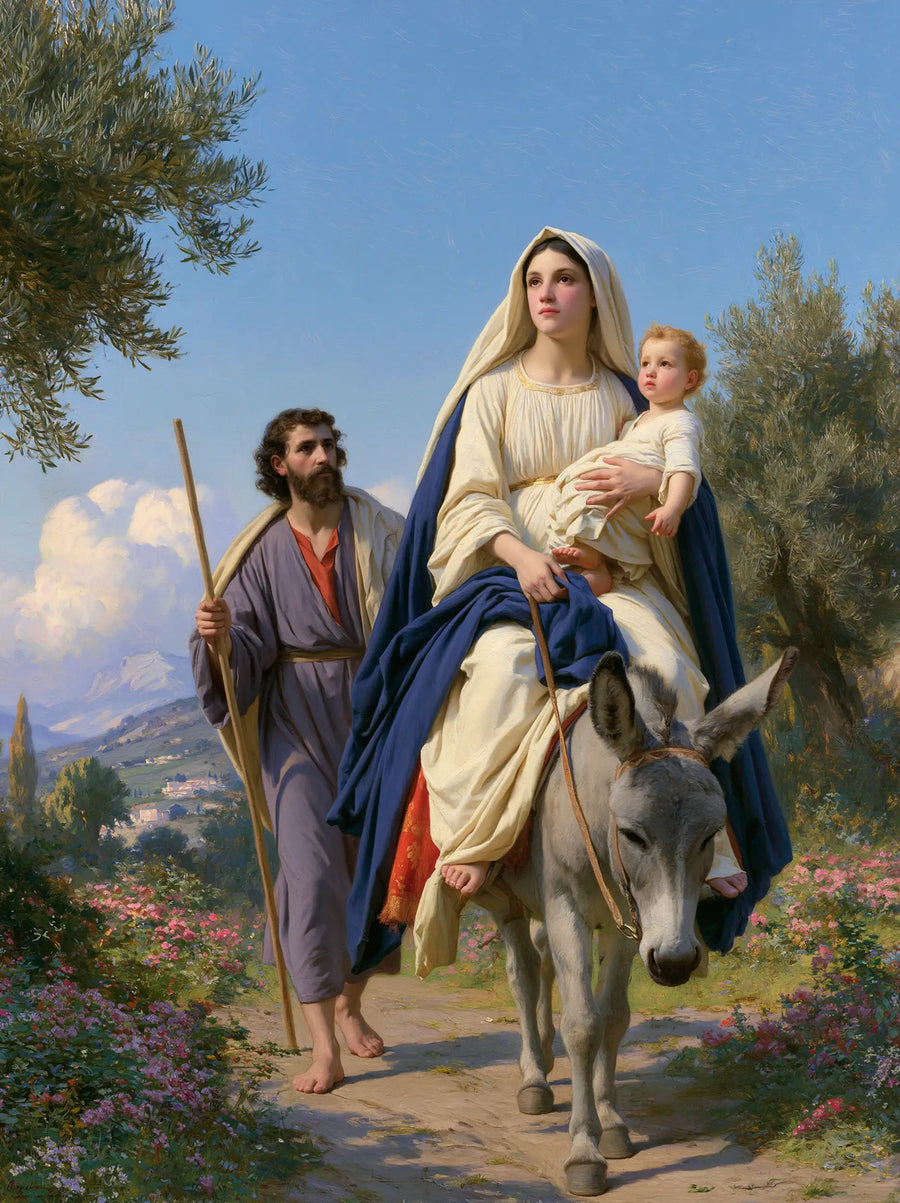
The staff speaks of a journey on foot. Compare its strong line with the white mantle, which draws attention to Mary and the child.
3. The Journey through the Wildflower Valley

The flowers give the valley a softness that sits alongside the urgency of the Gospel account. Notice how the foreground invites a slower look.
4. The Blue Robe on the Sunlit Trail
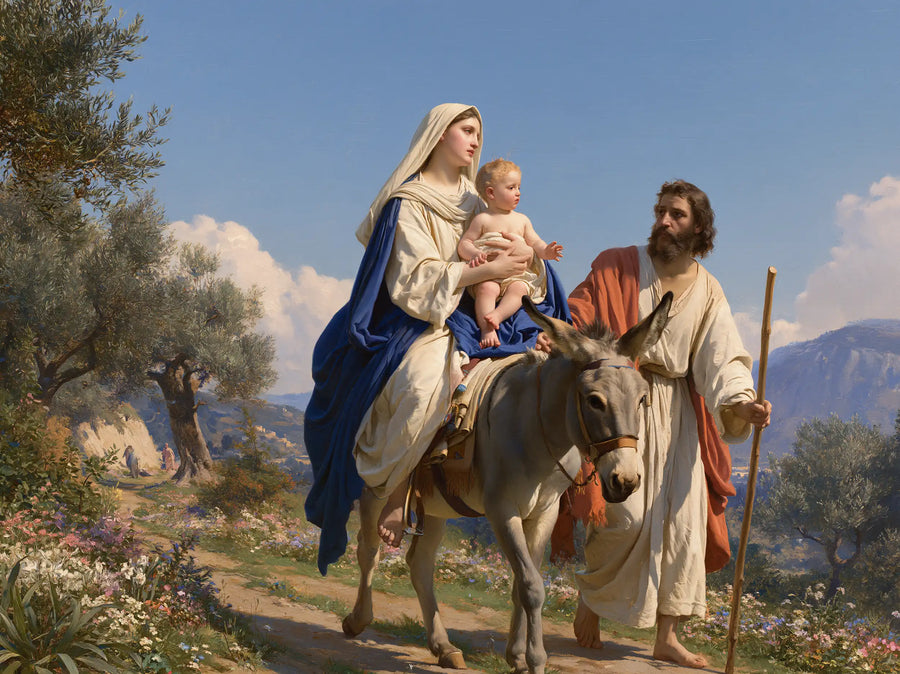
The blue robe provides a clear point of focus on the bright trail. This contrast may also help the figures read at a smaller print size.
5. Joseph Watching over the Resting Child
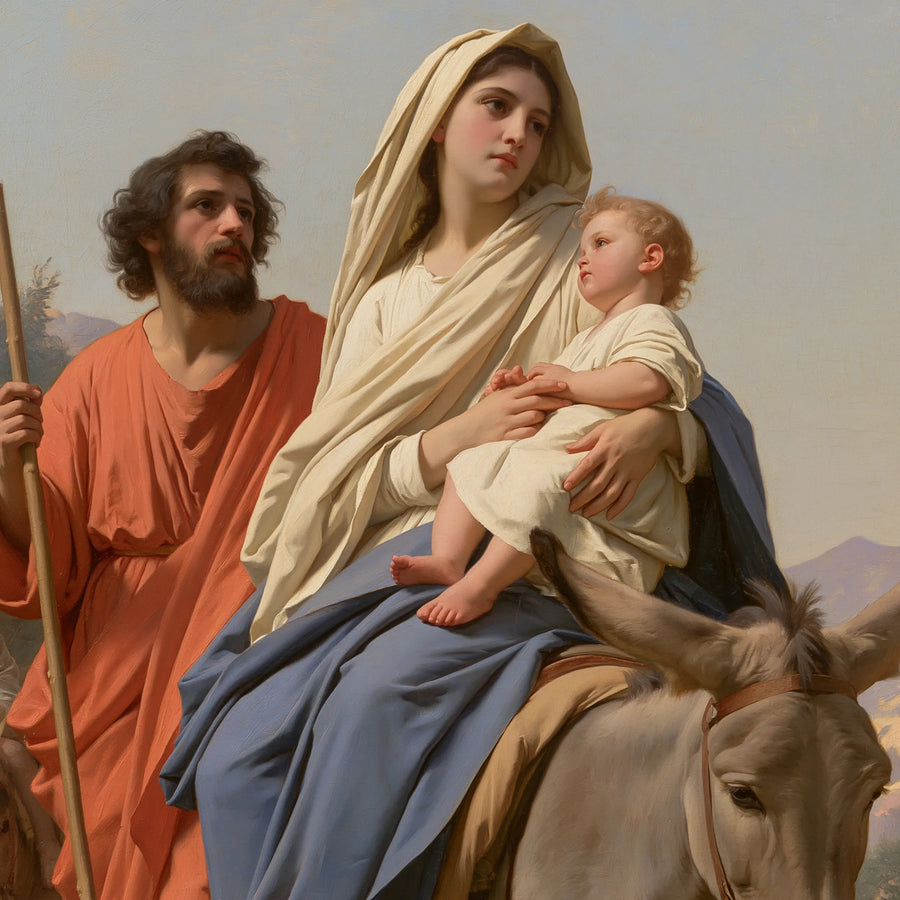
This interpretation pauses on Joseph’s watchfulness. Compare how attention is conveyed here with the works in which his staff or the turn of his body shows that the group is still on the move.
6. The Mother and Child on the Grey Donkey

The grey donkey gives the picture a clear traveling silhouette. Matthew does not specify how the family traveled. The animal became a familiar part of the visual tradition.
7. The Flowered Path beneath the Mountains

The flowers and mountains mark two ends of the visible distance. A wider display can give your eye time to move between them before returning to the figures.
8. The Holy Family beside the Olive Grove

The trees suggest a place to pause and shelter. Read the painting beside Matthew 2:13–15 and consider how the imagined landscape adds to the spare account of the escape.
9. The White Veil beneath the Desert Light
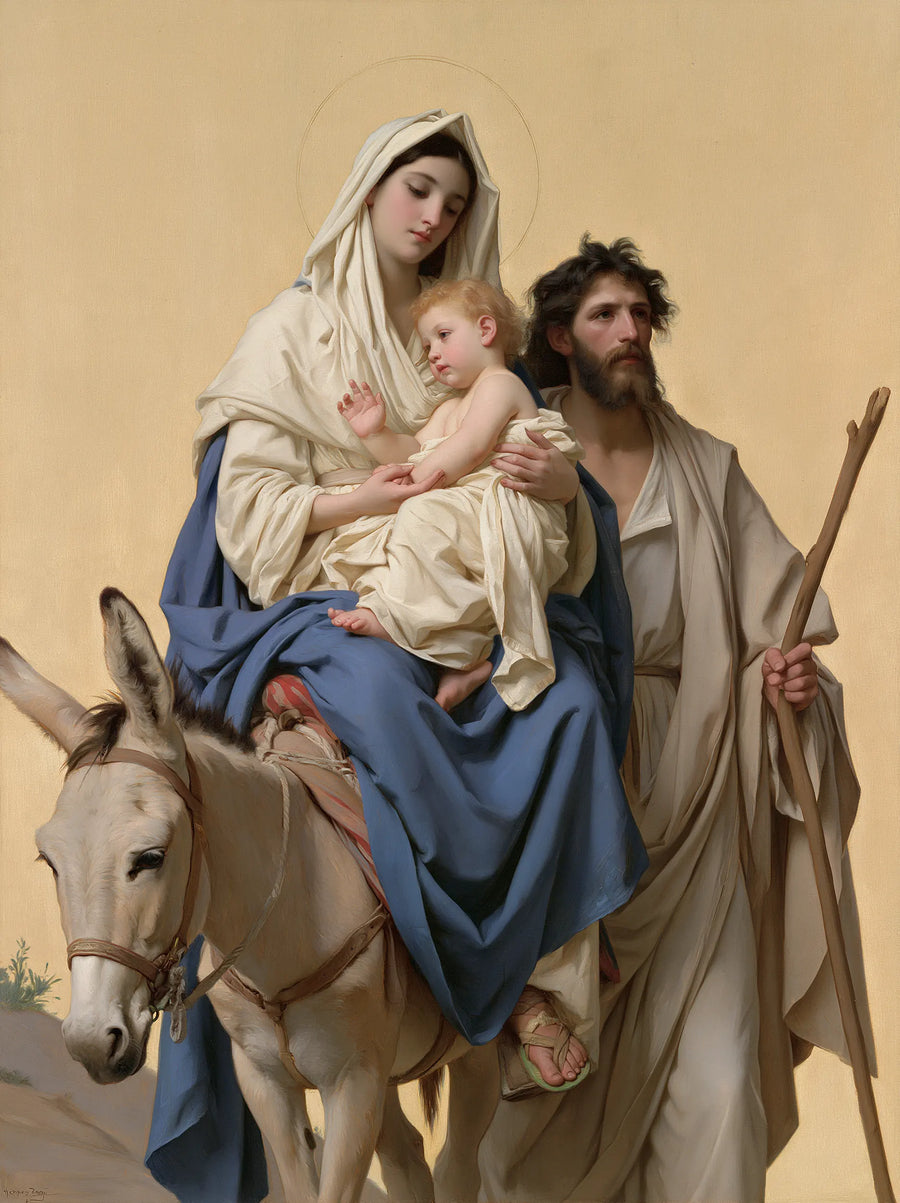
The white veil catches attention in the open light. Judge the print preview at the scale you intend to use so the folds remain distinct from the sky and terrain.
10. The Pilgrim Staff beside the Donkey
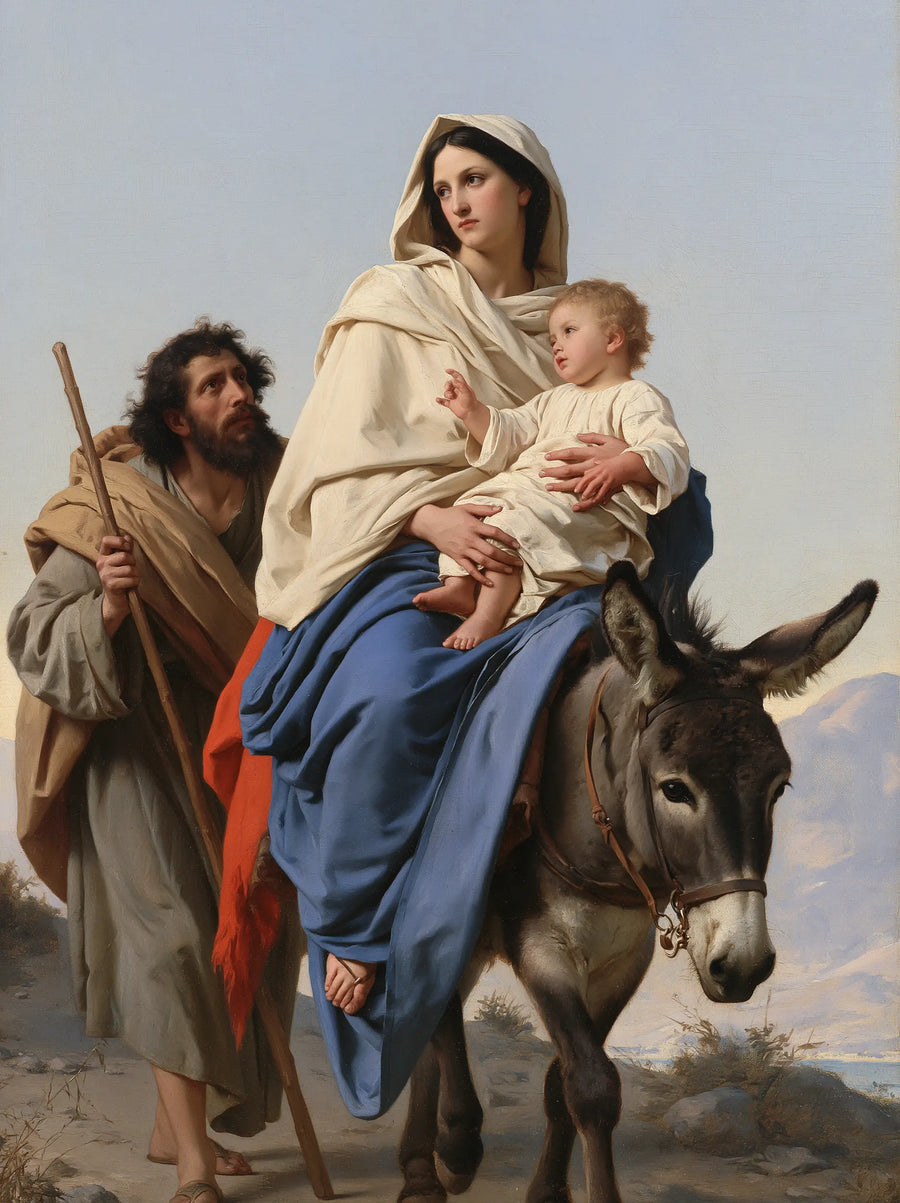
The staff and donkey bring ordinary objects of travel into focus. Look at the space around them to see whether the scene feels like a pause or the beginning of another stretch of road.
Choosing a print for your space
Choose a landscape format if the road and horizon are central to what you see in the scene. For close viewing in a prayer corner, a composition with larger figures keeps small expressions and gestures easier to read. Check the frame opening against the artwork’s proportions, particularly where the path or the donkey reaches the edge.
Browse the full Flight into Egypt collection · Explore historical Flight into Egypt paintings